
James Hersey: in between places, sounds and something new

The Vienna-born artist left home to chase a career in the US, found global success early, then stepped back to rebuild on his own terms. Now in Rotterdam, his music is shifting again: broader and more open than ever.
Every artist finds inspiration in different ways. For some it’s structure, for others it’s routine. For James Hersey, it’s something less fixed, it is a process shaped by movement, instinct and the spaces in between.
James Hersey grew up in Vienna, a city where music carries a certain weight. Surrounded by that legacy, he moved naturally between instruments as a kid such as drums, bass and guitar, driven less by discipline than by curiosity. By the age of 11 he had already written his first song and, almost without thinking, started recording himself. “I was just completely into it,” he says. At first, music meant playing in bands, learning how everything fits together, figuring things out collectively. But over time, it became clear that he was approaching it differently. “When I saw the others weren’t as ambitious as me, I decided to start my own thing.”
It wasn’t a dramatic turning point, just a quiet shift in direction.

After finishing school, that same instinct pushed him further. Staying in Vienna no longer felt right, so he left for the United States to see how far he could take it. What followed came quickly. In 2015, a collaboration with Kygo and Dillon Francis introduced his voice to a global audience and led to a record deal in New York, along with a run of songs that carried that momentum forward. Tracks like Coming Over, Miss You and How Hard I Try built that early momentum, while later releases such as Strangers, which reached No. 7 on the Billboard Dance chart, reinforced his place within the scene. Among his releases with Soave Records, you can find tracks like Next Door (Walk On By) and Electric Feel, which reflect the more open and genre-fluid direction his music has taken in recent years.
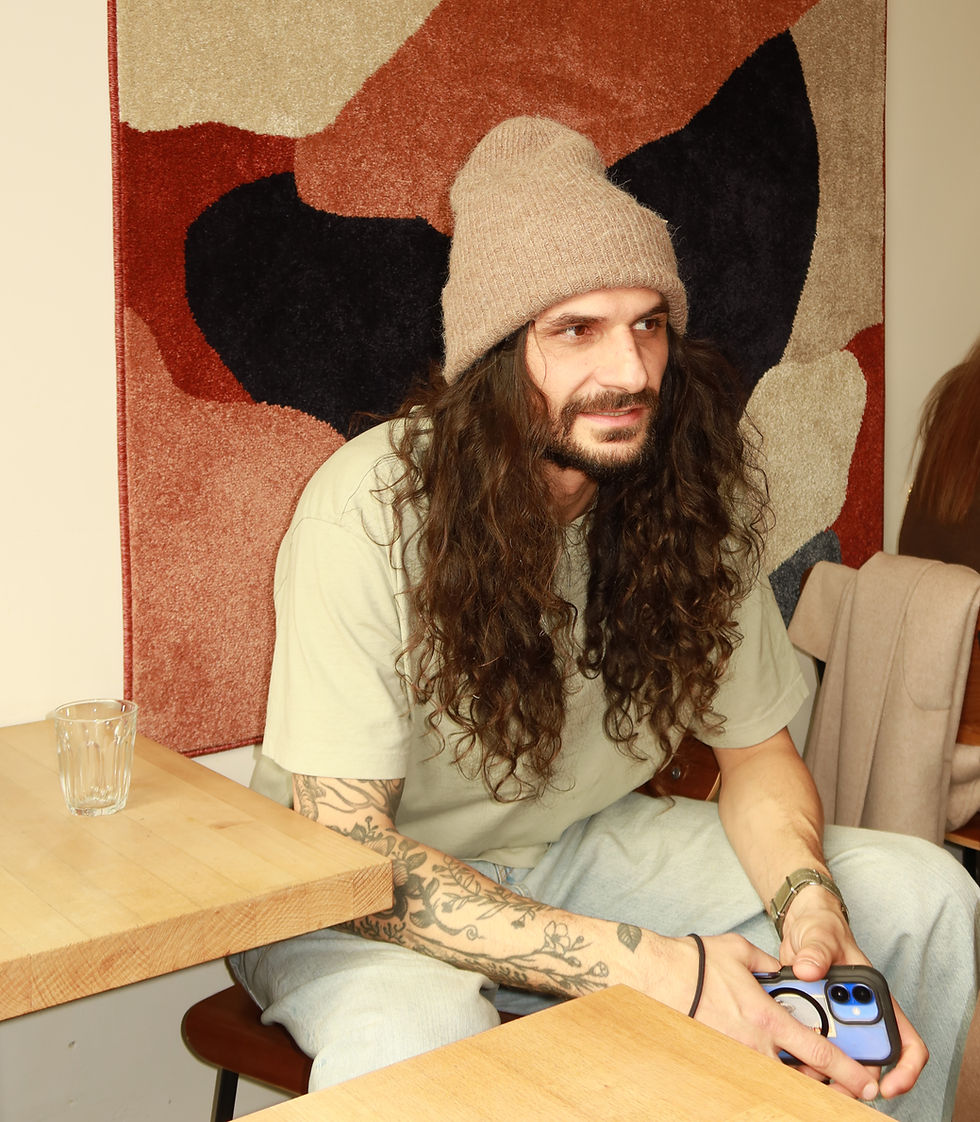
After COVID, Hersey gradually stepped away from the structure he had built himself into and returned to working independently. There was no single moment where everything changed, just a steady move back toward something more flexible and personal. “These days I work on my own schedule,” he says. “Write for different artists, different genres… release songs I love.” That shift is clearly reflected in his current sound, which feels deliberately open. His recent work moves between chillhouse, deep house, afro house, indie-dance and even drum and bass, without settling into one fixed identity. “I’d say it feels a bit unmoored at the moment,” he says, “but in a good way.” It’s less about defining a genre and more about staying in motion.
These days, before a session, James Hersey often finds himself sitting somewhere between stops in the Netherlands, watching people come and go, letting his thoughts settle before the day properly begins. It’s a small ritual, but it says a lot about where he is right now. There’s less urgency than before, less pressure to force ideas into place. “It clears your head,” he says. “You kind of arrive already in the right space.” It’s a very different rhythm from how things started.
That sense of movement extends beyond the music itself. Not long ago, he relocated to Rotterdam, a decision that he explains simply, came down to love. The change of city quickly fed into his creative life, bringing new collaborators and a different kind of energy. At the same time, it’s been a period of transition. His apartment is still being renovated, which means no home studio for now and a workflow that depends on moving between different spaces. “I love writing for others,” he says, “but I can’t wait to get back to doing my own thing on my own terms.” For now, the process adapts: sessions built around whatever is available, ideas captured in the moment and days that often end with a couple of strong sketches or, on a good day, a finished track.

The way those ideas come together hasn’t really changed. If anything, it’s become simpler
over time. “The best ideas are spontaneous,” he says. He tends to start with chords and melody, letting those elements guide everything else such as lyrics, mood, direction. Sometimes there’s a concept going into a session, but more often it emerges naturally while the song is being created. Looking back, that approach explains why his catalogue feels so varied yet still connected. “I’ve always been proud to be a diverse writer,” he says. “Rock, rap, acoustic… it all comes from the same place.” The constant, he suggests, is his voice, not just in the literal sense but in the perspective that ties everything together.
There’s also a clear sense of what he wants his music to do. “Two layers,” he says. “One in the body, and one in the mind.” It should make you move, but also leave something behind. That balance between physical energy and emotional depth is something he keeps coming back to, even as the sound itself continues to shift.
Right now, that balance is taking shape in new material, including an upcoming track called Runaway, a collaboration with Eauki that leans into an indie-dance direction, driven by a distinctive live guitar riff. It’s the kind of song, he says, that connects immediately but also grows over time, revealing more with each listen. And in many ways, that feels like a reflection of where he is now: not tied to one place or one sound, but moving between ideas, cities and collaborations, allowing things to unfold naturally.
If there’s a thread running through it all, it’s not about arriving somewhere fixed. It’s about staying open long enough for something real to happen.




Space Waves features simple controls but intense gameplay. Players must carefully time their movements to avoid crashing into obstacles in a constantly moving environment.
I really enjoyed reading this artist feature because it offers a deeper look into the creative journey behind the music rather than focusing solely on achievements and releases. James Hersey’s story of evolving as an artist, exploring new sounds, and redefining his direction after experiencing success is both inspiring and relatable. What stood out most was the emphasis on growth, authenticity, and the willingness to embrace change instead of remaining confined to expectations. The article does a great job of showing how creativity often develops through experimentation, reflection, and the courage to take new paths. It is always fascinating to learn about the experiences that shape an artist’s sound and perspective, especially when those experiences span different countries, cultures, and…